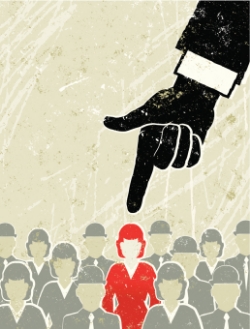
Barneys Settles "Shopping While Black" Suit With NY AG

As covered by the Style of the Case:

"According to the agreement, Barneys will pay $525,000 in damages, fees, and penalties, employ an anti-profiling consultant with expertise in the prevention of racial profiling in loss prevention and asset protection; Investigate customer complaints of profiling; develop and conduct anti-profiling training for loss-prevention and sales employees; adopt new loss-prevention detention policies and a new anti-profiling policy;limit access to its closed-circuit TV areas by local law enforcement officers and maintain records of visits by local law enforcement officers; and establish new record keeping requirements on investigations, detentions and false stops conducted by loss-prevention employees.
Rev. Al Sharpton released a statement Monday:
'Barneys’ agreement with the attorney general was a 'move in the right direction towards fairness and equal respect for all consumers, but we must monitor and continue to be vigilant.''” (link).

Rather incredibly, this is the second time the NY AG has sued Barneys for this exact same thing.

"In 2005, the state attorney general’s office, then under Eliot Spitzer, filed a federal lawsuit against Macy’s that claimed racial discrimination of black and Hispanic customers.

* * *

Macy’s at the time denied any wrongdoing, but the suit was resolved after the company agreed to pay $600,000 in damages, create a position of security monitor, develop regulations on handcuffing, and keep a database of records of all detentions." (link)

Question - Who will be the next AG to bring the same suit, about the same thing, ten years from now after Schneiderman -- and will it also be settled for almost the same amount of money?

Actually, this time it was resolved for $75,000 less than in 2005 so I guess we can estimate it will be $450,000 next time around.

Barneys appears to be a truly wonderful store.

NYC Sued for Inaccessible Sidewalks For Visually and Physically Disabled

Earlier this week Disability Rights Advocates filed a class action suit against New York City regarding the inaccessibility of NYC streets to the disabled:

"In a complaint received by the United States District Court for the Southern District of New York, the group, Disability Rights Advocates, said the class-action suit aimed to “end decades of civil rights violations” in what is ‘arguably, for non-disabled residents, the most pedestrian-friendly large city in the United States.’
Sidewalks and pedestrian routes, the group said, are often inaccessible for blind New Yorkers and people who use wheelchairs, walkers and other travel aids. Among the dangers, the group described curbs without ramps at pedestrian crossings, midblock barriers like raised concrete, and broken surfaces that can imperil wheelchair and cane users.
The focus of the suit is Lower Manhattan, below 14th Street, where problems are pronounced, according to the complaint.” (link)

The lawsuit, which alleges violation of both federal and city law, seeks to certify a class action of “all persons with mobility and/or vision disabilities who have been and are being denied the benefits and advantages of New York City's pedestrian rights-of-way in Lower Manhattan because of Defendants' continuing failure to design, construct, and maintain pedestrian rights-of-way that are accessible to persons with mobility and/or vision disabilities.”

 The complaint seeks only declaratory and injunctive relief – including that the City:

a. Ensure that pedestrian rights-of-way, when viewed in their entirety, are readily accessible and usable by persons with vision and mobility impairments.

b. Undertake prompt remedial measures to eliminate physical barriers to access to pedestrian rights-of-way to make such facilities accessible to Plaintiffs in accordance with federal accessibility standards.

 c. Maintain any existing accessible features of Defendants' pedestrian rights-of-way so that such features provide full usability for persons with vision and mobility impairments.

 d. Ensure that all future new construction and alterations to sidewalks and streets results in the provision of pedestrian rights-of-way that are fully compliant with federal accessibility standards;

 e. Prepare a complete Self-Evaluation and a complete and publicly available Transition Plan regarding the accessibility of existing pedestrian rights-of-way in compliance with Title II of the ADA and Section 504.

 Some interesting observations from the complaint:

a)  “more than 600,000 New Yorkers with mobility and vision disabilities continue to be excluded from the pedestrian culture that is so critical to community life in New York City because many of the City's sidewalks and pedestrian routes are too dangerous for use by persons with disabilities.”  (emphasis added).
b)    “A recent survey conducted by the Center for Independence of the Disabled ("CIDNY") of 1066 curbs in Lower Manhattan found that more than seventy-five percent of the corners surveyed had barriers presenting safety hazards to persons with mobility and vision impairments, including nearly a quarter of the curbs surveyed having no curb ramps whatsoever.” (emphasis added)

Lastly, the complaint notes that the suit was filed only after the De Blasio administration “refused to provide meaningful access to their sidewalks and pedestrian routes by making improvements to curb ramps and sidewalks over a reasonable period of time” or “participate in structured settlement negotiations to discuss these proposed improvements.”

It will be interesting to see how the professedly liberal De Blasio administration handles this litigation in the long term. 

Notably, shortly before De Blasio took office, and after several years of litigation, the Bloomberg administration finally settled a class action lawsuit concerning the accessibility of NYC taxicabs to the disabled.

The De Blasio administration obviously cannot waive a magic wand and fix every sidewalk curb in a day.  But why not enter into cooperative negotiations to formulate a reasonable plan to address this problem instead of wasting money, time, and resources defending a lawsuit - only to eventually settle anyways years later? Moreover, this suit concerns the disability rights statutes that advance the progressive platform and governance the administration has repeatedly stated it is focused on making a reality in NYC?

There are a lot of potential supporters, and ultimately votes, available from the visually or physically impaired NYC community that would also make these efforts politically worthwhile - that is if these voters can safely get to the voting booth on a NYC street.

 

Intro to the NYCHRL: Your Right to a Non-Discriminatory Lunch

New York City is undeniably more liberal than most other places in America.  So it should be no surprise that it has one of the most protective anti-discrimination statutes in the country. 

In contrast, federal discrimination claims often face difficult hurdles.  There are countless situations where behavior that is objectively discriminatory, would not make it far as a discrimination claim under only federal law.

The result is that clearly discriminatory conduct goes unpunished, not because it is not discrimination, but because discrimination law has a standard, either judge made, or based on the text of the statute, that is very conservative - demanding at times incredibly exacting evidentiary support. 

But what about situations that are clearly discriminatory, but where there is a “smart discriminator”?  A discriminator who fails to leave a helpful document trail clearly showing the reason they did what they did was based on discrimination or retaliation.

Or what about instances that are discriminatory, but where the courts are be hesitant to find discriminatory because the conduct is viewed by some merely as passing slights?

Enter stage left – the New York City Human Rights Law, which applies less demanding standards for finding conduct to be discriminatory compared to its federal and state counterparts.

In fact, there are some pretty striking examples where the NYC law supported a discrimination lawsuit that might not have made it far in court under only federal law.

Here is one:

At an administrative hearing, a restaurant, a place of public accommodation under Administrative Code section 8-102(9), was found to have engaged in discrimination against an African American customer by asking her to pay for her food before receiving it, while three non-African American customers were not required to pay for their food until receiving their food orders. Respondents failed to demonstrate a legitimate, non-discriminatory motive for treating the African American customer differently.

Annotated NYC Administrative Code 8-107

Importantly, just this one instance was enough to find the restaurant liable for discrimination.

The restaurant was ultimately fined $5,000.

Amazingly, the restaurant did this to a “tester” from the New York City Commission on Human Rights – i.e. an employee of the Commission. 

 You can read the final decision and previous history here.

Come back for additional case studies demonstrating the distinction between federal and NYCHRL discrimination standards.


Obama Signs Executive Order Prohibiting LGBT Discrimination By Federal Contractors

This is obviously long overdue - but thankfully finally happening:

"The executive order has two parts: It makes it illegal to fire or harass employees of federal contractors based on their sexual orientation or gender identity, and it explicitly bans discrimination against transgender employees of the federal government. The part targeting federal contractors affects 24,000 companies employing roughly 28 million workers, or about one-fifth of the nation's workforce.
"America's federal contracts should not subsidize discrimination against the American people," Obama said during remarks at the White House just before signing the order. "I'm going to do what I can with the authority I have to act."
The provision affecting federal employees takes effect immediately, while employees of federal contractors will have their new protections in place by early next year, according to senior administration officials" (link)

President Obama signing the order yesterday:

GettyImages_453176359.jpg


Recently Pregnant Employees Also Protected From Pregnancy Discrimination For Four Months

Citing recent decisions from within the Second Circuit, New York federal Judge J. Paul Oetken found that protection from pregnancy discrimination extends to include recently pregnant women in addition to pregnant women:

Katherine Albin alleged viable pregnancy discrimination claims against Thomas Pink Inc., its corporate parent LVMH Moet Louis Vuitton Inc., and two supervisors under Title VII of the 1964 Civil Rights Act and New York state and city law, the U.S. District Court for the Southern District of New York said.  It found that the promotion denial may have occurred three and a half months after Albin gave birth to her first child.

Judge J. Paul Oetken cited emerging case law within the U.S. Court of Appeals for the Second Circuit holding that women who are four months or less removed from giving birth are still protected by Title VII's prohibition against pregnancy discrimination."

While observing that at some point after a pregnancy ends protection from pregnancy discrimination also comes to an end:

"[P]regnant women, women who very recently gave birth, and women on maternity leave are unquestionably within the protected class of pregnant persons, 'at some point in time such women are no longer 'affected by pregnancy, childbirth, or related medical conditions' and, thus, are not protected.'" (internal citations omitted) (link)

the court found that protection generally continues for approximately four months after a pregnancy:

"Distinguishing among previously pregnant women to determine who is still affected by pregnancy requires selecting a temporal cutoff based on the facts of the given case.  While ultimately dependent on the factual situation of a specific claim, a pattern has developed in this Circuit establishing a loose line at approximately four months from the date of birth." (internal citations omitted) (link)

In my view, along with age and disability discrimination, pregnancy discrimination is one of the more prevalent forms of discrimination today.  Unlike explicit race and gender discrimination, pregnancy discrimination (in its varied forms) does not carry the same heavy stigma and is surprisingly prevalent. 

Unfortunately, although prevalent, it is often unrecognized and/or unreported.

This decision goes a long way to help advance anti-discrimination protections for pregnant and recently pregnant employees.


LA's Lawsuit Against Wells Fargo Gains Further Steam

The City of Los Angeles' suit against Wells Fargo (previously covered here) made further progress this week:

"A federal judge has denied Wells Fargo's latest bid to end a lawsuit brought by the Los Angeles city government accusing the bank of discriminatory lending that led to a wave of foreclosures among minority borrowers.
In a ruling made public on Monday, U.S. District Judge Otis Wright denied the San Francisco-based bank's motion to have an appeals court decide whether Los Angeles has legal standing to recover damages under the U.S. Fair Housing Act.
Wells is one of four banks sued by Los Angeles for allegedly giving minorities mortgage loans they could not afford, causing defaults, lower property values and neighborhood blight.
The city is seeking damages for lost tax revenue and increased city expenses in affected neighborhoods."  (continue reading)

The Ten Largest Discrimination Settlements of 2013

From Inside Counsel the top ten largest discrimination settlements of 2013.

Topping the list is:

"$160 million – McReynolds, et al. v. Merrill Lynch & Co.
The largest settlement of 2013 has its roots eight years earlier, when in 2005, broker George McReynolds accused Merrill Lynch & Co. of giving white brokers more lucrative accounts while denying black employees equal pay and career advancement opportunities. McReynolds filed a lawsuit on behalf of 700 black brokers who worked for Merrill. Before the suit was settled out of court in August, it had seen two appeals in the Supreme Court and survived Merrill Lynch's acquisition by Bank of America in 2009."  (link)

It is also gratifying to see a case I worked on for several years with my prior firm at #8.

"$3.1 million – Easterling, et al. v. State Of Connecticut, Department Of Correction
Similar to the Chicago case, this suit alleged that the a physical fitness test composed of a 1.5 mile run required by the Connecticut Department of Corrections was not a business need, and that it discriminated against female candidates. As a result over 200 women who applied for a Correction Officer position in 2004 o4 2006, were certified for the class. The settlement was finalized in July." (link)

(*small correction to IC - the Easterling class totaled 124 class members not 200)


The Nation: How Consumers Are Getting Screwed by Court-Enforced Arbitration

Yes, unfortunately, this applies to you:

"For more than forty years, the Supreme Court’s conservatives have been engaged in a campaign to shut the courthouse door to consumers, working people, small businesses and others seeking redress for corporate wrongdoing. 
In recent years, and especially since Chief Justice John Roberts and Associate Justice Samuel Alito joined the Court, a major weapon in this campaign has been the Federal Arbitration Act (FAA) of 1925. The conservatives have used the act to prevent victims of such abuses from seeking redress in the courts, forcing them into pre-dispute arbitration instead. In doing so, they lose a public trial, a jury and a neutral judge, as well as an appeal to a higher court; in many cases they may also have to give up discovery rights. It is not uncommon for them to wind up before an arbitrator who is dependent upon the defendant’s business community for work and fees, and who may not even be legally trained. Not surprisingly, those forced into arbitration almost always fare much worse than they would in court.
* * *
Two reports issued at the end of last year show how effective the Court’s arbitration rulings have been. Last December, the Consumer Financial Protection Bureau (CFPB) issued a preliminary report, which found that contract clauses mandating pre-dispute arbitration are a “common feature of consumer financial contracts”; a final report is due by year’s end. The agency found such clauses in over 50 percent of credit card loans, 81 percent of prepaid charge cards and in checking accounts covering 44 percent of all insured deposits."  (emphasis added). (continue reading)

When I first started to understand the scope of this issue and began taking a hard look at my various consumer contracts it was truly startling.  Even almost a decade ago, I found that the vast majority of my consumer contracts were subject to mandatory arbitration agreements.

For example, that huge bill AT&T sent you that was incorrect - perhaps because they charged you based on your previous plan even though you upgraded - if you can't get a decent customer relations person on the phone (a real risk) you can't challenge the charge in court.

That's something to really give some thought to as a consumer.  

Do you really want to have a contract with a company that is not willing to stand by the quality of its product and services in court?  If the answer to that is no - then there's a real problem -  some consumer industries do not offer a viable company you can use that does not use mandatory arbitration agreements.

If this is all a bit disturbing you may have good reason to get behind the stalled Arbitration Fairness Act. Take a look:

THE ARBITRATION FAIRNESS ACT OF 2013
Senator Al Franken
The ability of ordinary Americans to seek justice in our courts, even when up against the most powerful corporate interests, has become a fundamental element of our civil justice system. However, the growing use of forced arbitration provisions in consumer and employment contracts has eroded this essential function. Forced arbitration provisions thwart the ability of workers and consumers to hold corporations accountable for wrongdoing, even in the most egregious cases. (continue reading)